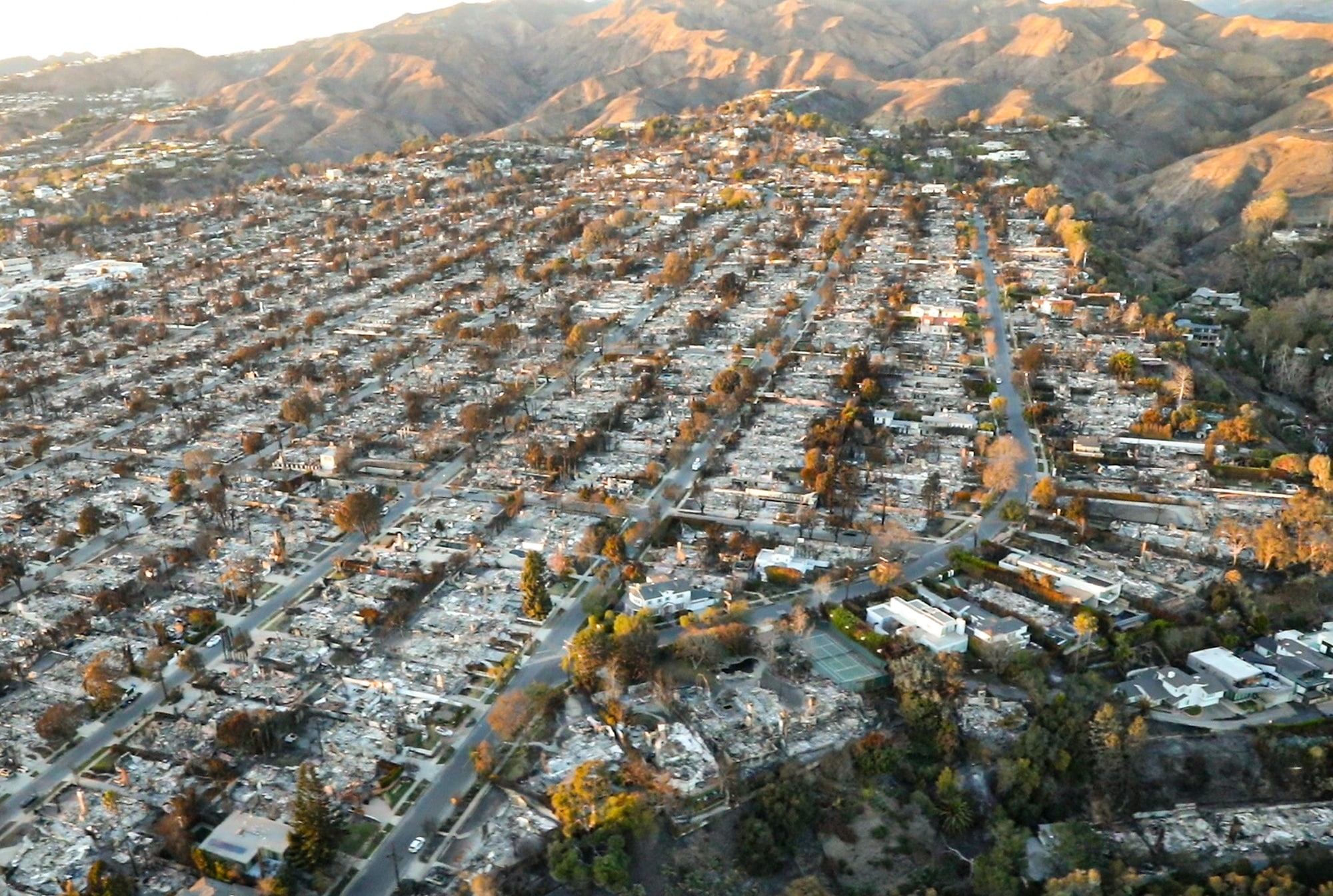
This loss is not inevitable. Introducing the Million Wildfire Safe Homes Initiative.
Wildfire destroyed nearly 70,000 buildings across California in the last decade. We know how to make a home much harder to ignite, but few homes at risk have had the work done. The initiative aims to harden one million of them.
55,528 of those buildings were lost in 14 fires that each destroyed more than 1,000.
Most California homes were built before the wildfire code.
Since 2008, new homes in California’s highest-hazard areas have been built to a wildfire code. After the Camp Fire, 51% of homes built to it were undamaged, compared with 18% of older homes.
More than 9 in 10 of the state’s homes were built before the code existed. Inside the Palisades and Eaton fire areas, the share was 95–98%. The code governs new construction, so an existing home meets it only through a retrofit.
More than 2 million of those homes are in the state’s highest-risk areas. Few programs help a homeowner who wants to retrofit today choose a standard, find a trained contractor or pay a five-figure bill.
Cover photo: Sgt. Chau Le, California National Guard (DVIDS). See every figure’s source.
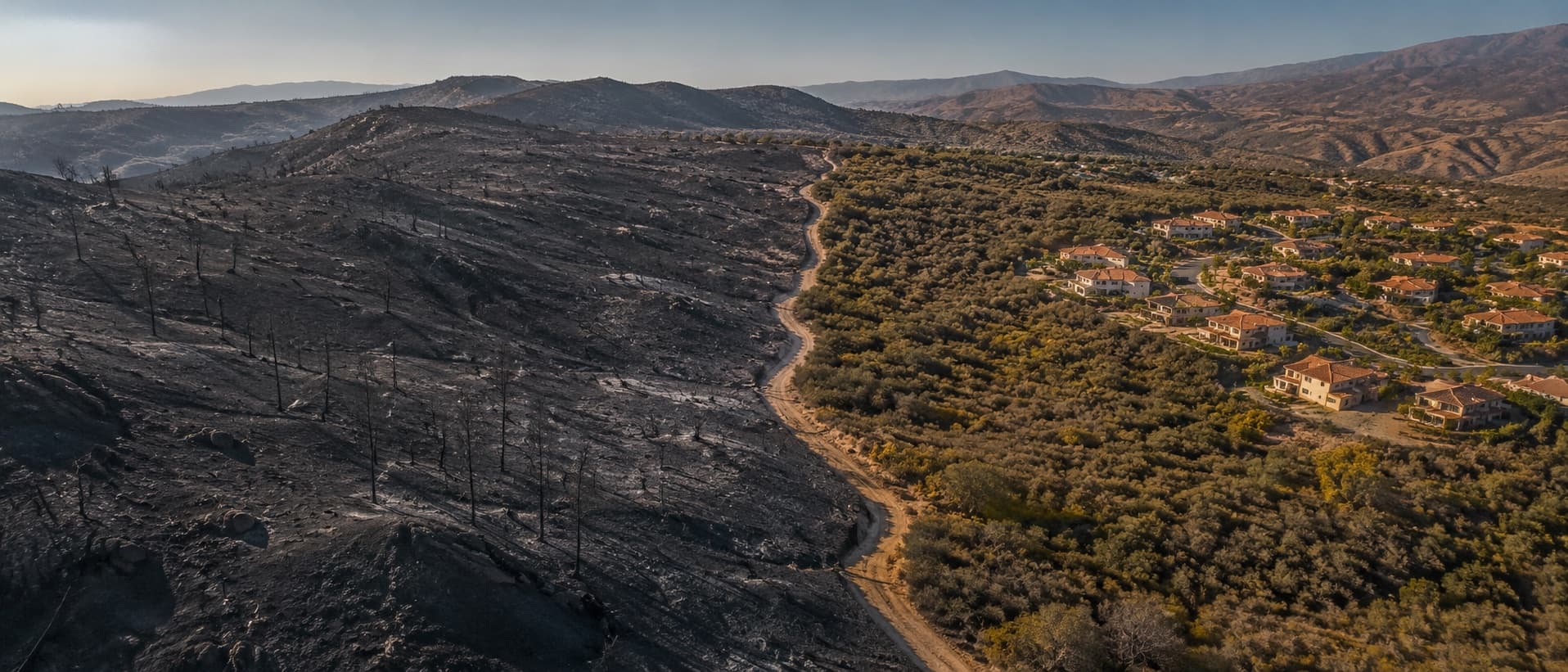
Most homes lost to wildfire are ignited by windblown embers that get inside or land on something that burns. The measures that stop embers from igniting a home are well understood.
- Vents
- Ember-resistant, screened
- Zone 0
- The first 5 feet cleared of anything that burns
- Roof & gutters
- Fire-rated, kept clean
- Gaps
- Closed under eaves and decks
The retrofit standard the initiative proposes costs about $15,000 a home.
Homes with all four measures avoided damage far more often than homes with just one, and clearing the first 5 feet alone can cut losses by about 17%.
Sources: IBHS 2025 LA Conflagrations report, 252 structures; UC Berkeley, Nature Communications, 2025.
The blueprint for a million wildfire safe homes.
California set a goal of a million solar roofs, backed it with financing, incentives and public awareness, and has since passed 2 million. The same approach fits wildfire hardening.
Insurers that price wildfire risk must now credit mitigation, and the state already runs a proven financing model the work can use. No program yet connects these pieces.
Sources: California Million Solar Roofs Initiative; California Department of Insurance, Safer from Wildfires (2022).
California already has an early version of each of the five pieces. The blueprint connects them and gives each one an owner.
One standard for a hardened home
The fire service would define the qualifying work once, in terms insurers can recognize when they price a policy.
A monthly payment instead of a $15,000 bill
A no-lien loan model the state has proven over a decade. Local credit unions lend below market, and a small public reserve absorbs losses.
Insurance that rewards the work
California now requires insurers that price wildfire risk to give discounts for mitigation. For a certified home, the discount could help repay the loan.
A free assessment of any home
It uses public data to show a homeowner what their home needs and which discounts the work could earn. A working prototype exists today.
Trained contractors to do the work
Contractors would be certified to the standard, and local programs, fire districts and utilities would help neighbors sign up together, block by block.
The benefit grows as more homes on a street are hardened.
A hardened home is less likely to ignite and less likely to spread fire to the house next door.
When most homes on a block are hardened, fire has fewer places to catch and spread.
A neighborhood where most homes are hardened can be easier for insurers to cover.
When a fire passes, more of the block is still standing.
More families would keep their homes and stay. Contractors and manufacturers would gain steady work, and insurers would have more reason to write policies again.
California would be the first state to harden homes against wildfire at this scale.
$4
returned for every $1 spent hardening a home
1,100 jobs
from a single state’s prevention program
$700B+
in housing and infrastructure de-risked by mitigation
Sources: National Institute of Building Sciences, Natural Hazard Mitigation Saves (2019); Greenline Insights; U.S. Forest Service.